
Custom orthotics, or shoe inserts, should be periodically replaced. Orthotics must fit properly to give you the best results. Protect your feet and ankles!
Custom orthotics, or shoe inserts, should be periodically replaced. Orthotics must fit properly to give you the best results. Protect your feet and ankles!
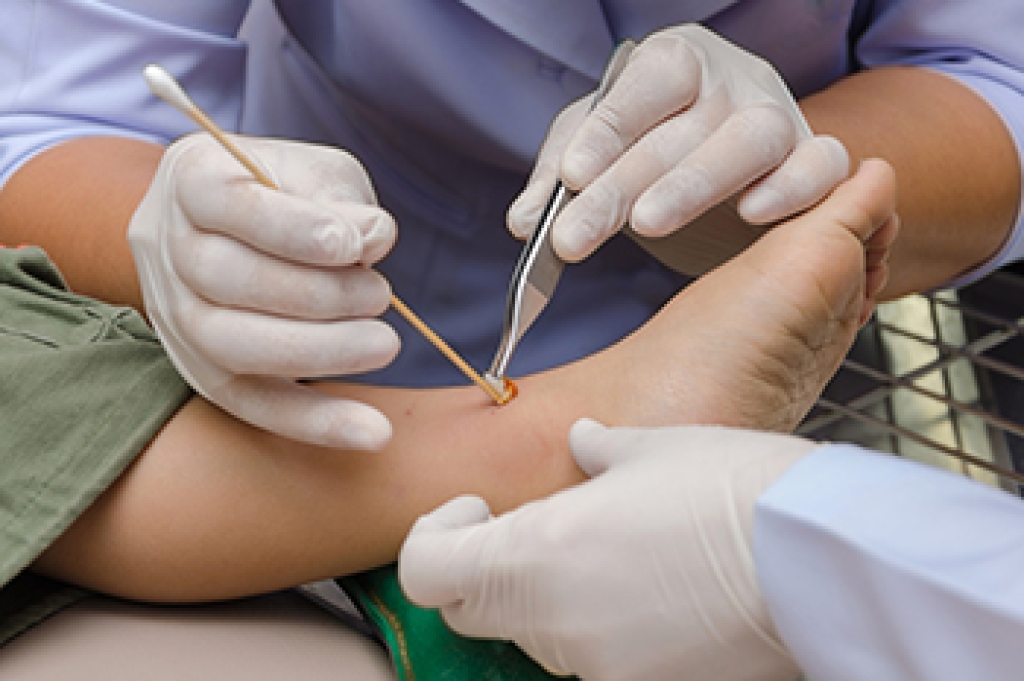
Foot infections can affect anyone, but they tend to be more complicated in people with diabetes. Even a small cut, blister, or sore can worsen quickly when blood flow or sensation is reduced. In these cases, the body may not respond as efficiently, allowing the problem to spread deeper into the skin or surrounding tissue. Compared to those without diabetes, these infections are more likely to return after treatment, require hospital care, or lead to more extensive procedures. Healing can also take longer, especially if the issue is not addressed early. For individuals without diabetes, infections still need prompt attention, but they often resolve more quickly with appropriate care. The key in all cases is early recognition and treatment. If you notice redness, swelling, warmth, drainage, or increasing pain in your foot, it is strongly suggested that you see a podiatrist for proper diagnosis and appropriate treatment, which may require wound care.
Wound care is an important part in dealing with diabetes. If you have diabetes and a foot wound or would like more information about wound care for diabetics, consult with Melissa C. Verde, DPM from Florida. Our doctor will assess your condition and provide you with quality foot and ankle treatment.
What Is Wound Care?
Wound care is the practice of taking proper care of a wound. This can range from the smallest to the largest of wounds. While everyone can benefit from proper wound care, it is much more important for diabetics. Diabetics often suffer from poor blood circulation which causes wounds to heal much slower than they would in a non-diabetic.
What Is the Importance of Wound Care?
While it may not seem apparent with small ulcers on the foot, for diabetics, any size ulcer can become infected. Diabetics often also suffer from neuropathy, or nerve loss. This means they might not even feel when they have an ulcer on their foot. If the wound becomes severely infected, amputation may be necessary. Therefore, it is of the upmost importance to properly care for any and all foot wounds.
How to Care for Wounds
The best way to care for foot wounds is to prevent them. For diabetics, this means daily inspections of the feet for any signs of abnormalities or ulcers. It is also recommended to see a podiatrist several times a year for a foot inspection. If you do have an ulcer, run the wound under water to clear dirt from the wound; then apply antibiotic ointment to the wound and cover with a bandage. Bandages should be changed daily and keeping pressure off the wound is smart. It is advised to see a podiatrist, who can keep an eye on it.
If you have any questions please contact our office located in Longwood, FL . We offer the newest diagnostic and treatment technologies for all your foot and ankle needs.

Zumba dancing is an energetic activity that helps strengthen the bones of the feet through repetitive weight-bearing movement. This type of exercise supports the maintenance of bone density, which is essential for preventing weakness and injury. The dynamic steps in Zumba improve balance and coordination while also enhancing muscle strength in the feet and ankles. Increased joint mobility is another benefit, allowing for better flexibility and reduced stiffness during daily activities. Regular participation can contribute to overall foot health and stability. A podiatrist can evaluate your foot structure, recommend supportive footwear, and address any discomfort that may arise from this activity. If you have developed foot pain from Zumba dancing, it is suggested that you consult a podiatrist who can treat various foot and ankle injuries, and guide you on staying active while protecting your feet.
Exercising your feet regularly with the proper foot wear is a great way to prevent injuries and build strength. If you have any concerns about your feet, contact Melissa C. Verde, DPM from Florida. Our doctor can provide the care you need to keep you pain-free and on your feet.
Exercise for Your Feet
Exercise for your feet can help you gain strength, mobility and flexibility in your feet. They say that strengthening your feet can be just as rewarding as strengthening another part of the body. Your feet are very important, and we often forget about them in our daily tasks. But it is because of our feet that are we able to get going and do what we need to. For those of us fortunate enough to not have any foot problems, it is an important gesture to take care of them to ensure good health in the long run.
Some foot health exercises can include ankle pumps, tip-toeing, toe rises, lifting off the floor doing reps and sets, and flexing the toes. It is best to speak with Our doctor to determine an appropriate regimen for your needs. Everyone’s needs and bodies are different, and the activities required to maintain strength in the feet vary from individual to individual.
Once you get into a routine of doing regular exercise, you may notice a difference in your feet and how strong they may become.
If you have any questions, please feel free to contact our office located in Longwood, FL . We offer the newest diagnostic and treatment technologies for all your foot care needs.
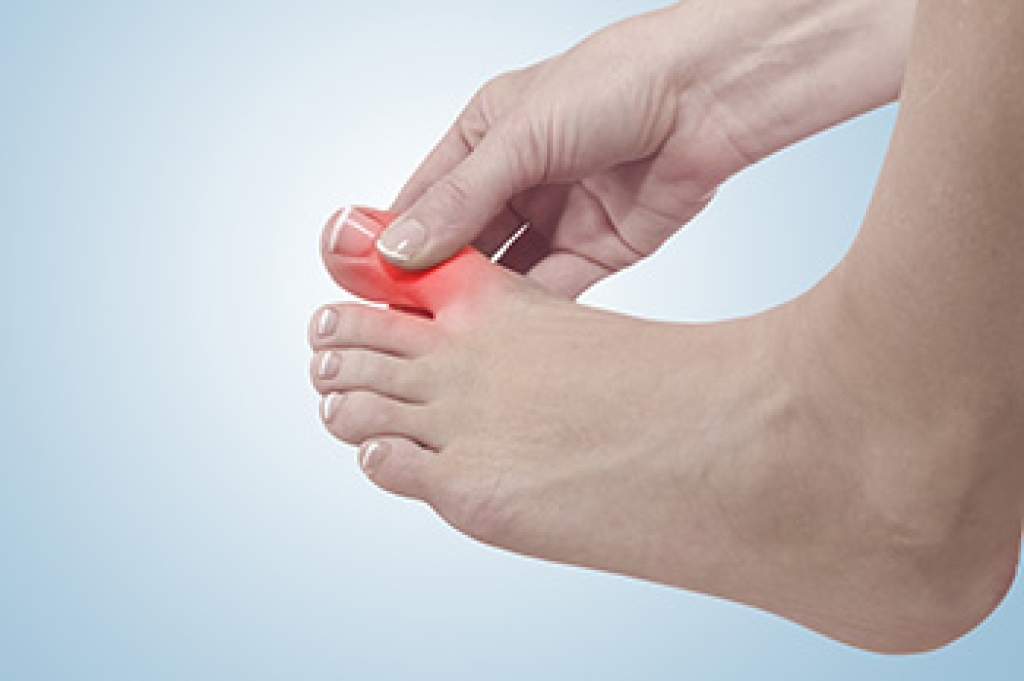
Gout is a form of inflammatory arthritis that often affects the big toe joint of the foot. It develops when uric acid builds up in the bloodstream and forms sharp crystals inside a joint. The pain usually begins suddenly, often during the night, and the joint may appear red, swollen, and extremely tender to touch. Even light pressure from a bedsheet can feel intense. Patients often describe the pain as burning or throbbing, and the skin around the joint may feel warm or tight. Common causes include high uric acid levels related to diet, dehydration, problems with kidney function, or genetics. A podiatrist can help diagnose gout through an examination, medical history, and sometimes blood tests or imaging. Treatment focuses on calming the inflammation and preventing future attacks. Care may include medication, supportive footwear, and guidance on lifestyle changes that reduce uric acid levels. Early treatment can protect the joint from long-term damage and reduce repeated flare-ups. If you think you may have gout, it is suggested that you make an appointment with a podiatrist.
Gout is a painful condition that can be treated. If you are seeking treatment, contact Melissa C. Verde, DPM from Florida. Our doctor will treat your foot and ankle needs.
What Is Gout?
Gout is a form of arthritis that is characterized by sudden, severe attacks of pain, redness, and tenderness in the joints. The condition usually affects the joint at the base of the big toe. A gout attack can occur at any random time, such as the middle of the night while you are asleep.
Symptoms
Risk Factors
Prior to visiting your podiatrist to receive treatment for gout, there are a few things you should do beforehand. If you have gout you should write down your symptoms--including when they started and how often you experience them, important medical information you may have, and any questions you may have. Writing down these three things will help your podiatrist in assessing your specific situation so that he or she may provide the best route of treatment for you.
If you have any questions, please feel free to contact our office located in Longwood, FL . We offer the newest diagnostic and treatment technologies for all your foot care needs.

Healthcare workers spend long hours standing and walking, which makes wearing proper footwear essential for comfort, safety, and injury prevention. Wearing well-fitted, supportive shoes helps reduce strain on the feet, ankles, and lower legs, which can lower the risk of conditions such as plantar fasciitis, tendon irritation, and joint discomfort. Protective, slip-resistant footwear can also help guard against workplace hazards, including exposure to blood-borne pathogens and other fluids that may be present in medical environments. Wearing supportive shoes can also help reduce muscle fatigue by providing cushioning and stability throughout demanding shifts. A podiatrist can evaluate foot structure, recommend proper footwear, and address developing foot problems. If foot pain or fatigue affects work performance, it is suggested that you promptly consult a podiatrist who can guide you on correct shoes to wear for ease and foot protection during your work day.
While working on the feet, it is important to take the proper care of them. For more information about working on your feet, contact Melissa C. Verde, DPM from Florida. Our doctor will treat your foot and ankle needs.
Working on Your Feet
Standing on your feet for long periods of time can cause stress and pain in your feet. Your whole body may experience change in terms of posture, back pain, bunions, callouses and or plantar warts. There are ways to avoid these conditions with proper foot care, smart choices and correct posture.
Positive Changes
Negative heeled shoe – Choosing this shoe type places the heel slightly lower than the ball of the foot. These are great for overall foot health. Find shoes that fit you correctly.
Go barefoot – Our feet were not designed to be enclosed for all hours of the day. Try to periodically expose your feet to air.
Eliminate Pain
Foot Exercises – Performing simple exercises, incorporating yoga and doing stretches are beneficial. This will allow increased blood flow to the area and muscles of the foot.
Achilles tendon – Stretching the foot out flat on the floor will relax the calf muscles and tendon. These exercises can be performed almost anywhere. Make sure you add these exercises to your daily regimen.
With a little bit of this information and knowing more about foot health, you will notice changes. Foot stretches and proper footwear will help with pain and prevent further issues.
If you have any questions please contact our office located in Longwood, FL . We offer the newest diagnostic and treatment technologies for all your foot and ankle needs.
Connect With Us

 Dr. Melissa
 Dr. Raluca